Frequently Asked Questions
FAQ
Yes, all charging stations offered by BEQ Technology have an SAE J1772 connector that is compatible with all rechargeable electric and hybrid vehicles sold in North America, except for Tesla charging stations.
We have charging stations available with a NEMA 14-50 plug, which is the same as the one used for stoves, but not for dryers, as their NEMA 14-30 connector is not powerful enough to meet standards. So yes, it is possible to plug it into a stove outlet.
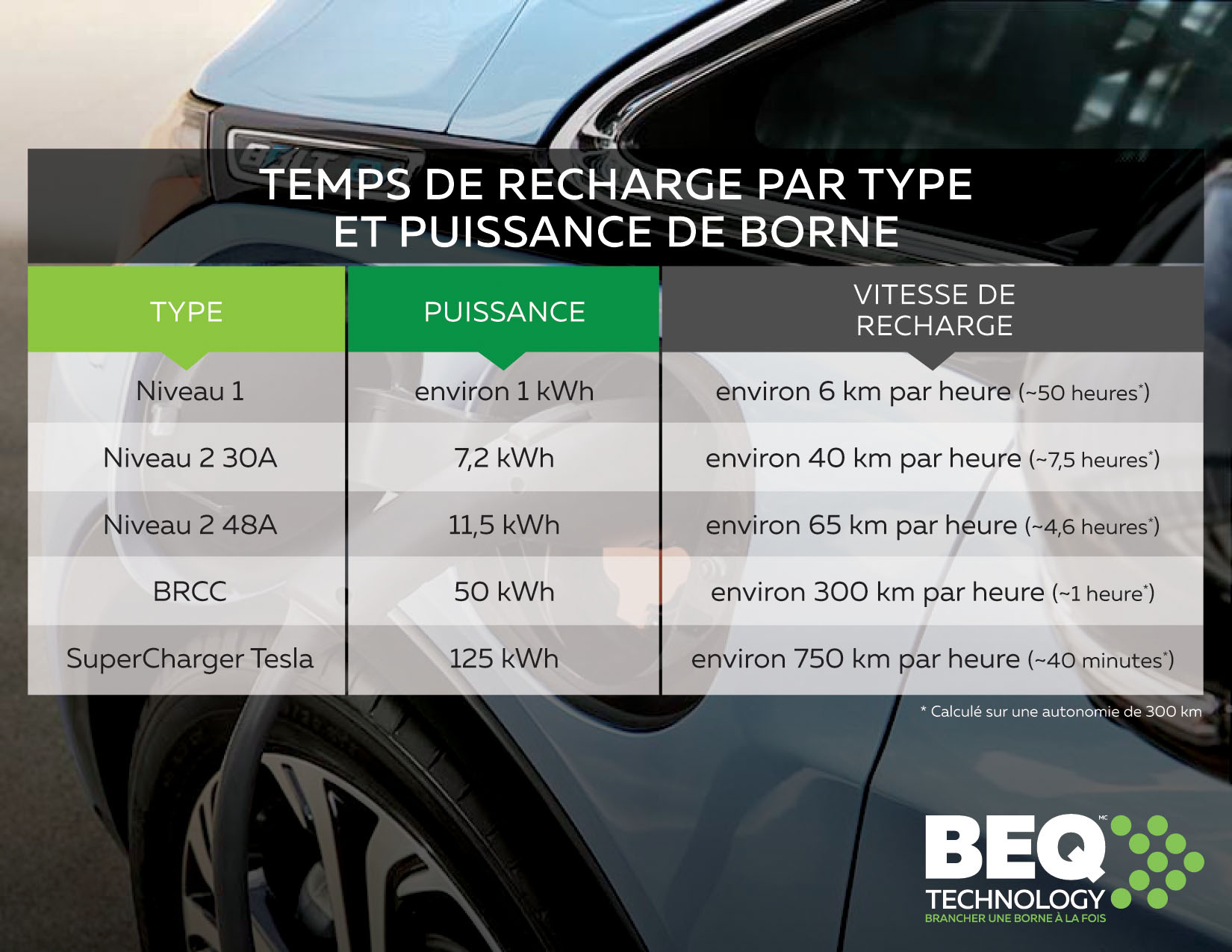
A Level 2 (240V) charging station will be much more efficient in terms of charging, as it is 5 to 6 times faster than a Level 1 (120V) charging station.
Level 1 charging station : The Level 1 charging station is the one that comes with the car, more commonly known as a 120V charger. This station is used for emergency charging due to its relatively slow charging speed. It can be useful when there are no other charging options available. This station will provide you with an average of 6 km of range per hour of charging.
Level 2 charging station : The Level 2 charging station, also known as a 240V charging station, is the one to get for your home. Much faster than the Level 1 charging station, it will charge your car in just 3 to 9 hours, depending on the size of the battery, and will also allow you to preheat your car in cold weather without draining the car’s battery. In addition, proper preheating will slightly increase your range. This makes a Level 2 charging station a very attractive option in Quebec’s cold climate. This station will provide you with an average of 30–55 km of range per hour of charging, depending on its power and the capacity of your car’s charger.
Level 3 charging station : Level 3 charging stations, known as fast chargers or DCFC (direct current charging stations), are often found in commercial parking lots or along highways to allow electric vehicle drivers to perform partial recharges so that they have enough range to complete their journey. However, caution is advised, as these fast charging stations tend to have a greater impact on battery health by reducing its maximum charging capacity when used too frequently. It is also recommended to stop charging when 80% capacity is reached, as from this point on, a Level 2 charging station becomes almost as fast and it will be less expensive to complete the charge on a Level 2 station than on a BRCC.
Which car do you want to charge? Not all cars are equal in terms of battery capacity, but also in terms of their onboard chargers. Depending on the manufacturer and battery capacity, onboard chargers indicate the maximum charging capacity, which, even if you try to charge at a higher power, will be useless. For example, the onboard charger for a Volt is 3.6 kWh (15A), a Leaf is 6.6 kWh (27.5A), a Bolt is 7.2 kWh (30A), and a Tesla is 9.6 kWh (40A base). The charging speed will always be the lower of the charging station’s capacity or the onboard charger’s capacity.
Do you have a garage? Do you park your car outside in the summer but inside in the winter? Do you have a cottage? If you answered YES to any of these questions, a portable charging station would definitely be an advantage for you. As the name suggests, a portable charging station allows you to take your charging station to your cottage without having to buy a second one. Just unhook it from the wall and take it with you for the weekend! All you need to do is have a second outlet installed for the charging station at the cottage. Ask an electrician to install a 240V outlet where the charging station will be installed. Portable charging stations also have a place to attach a padlock to prevent theft. In the event of damage, these stations are also easier to replace under the manufacturer’s warranty.
Installation of a charging station
Subsidies for the purchase of a charging station
Recharge tips
Charging cost
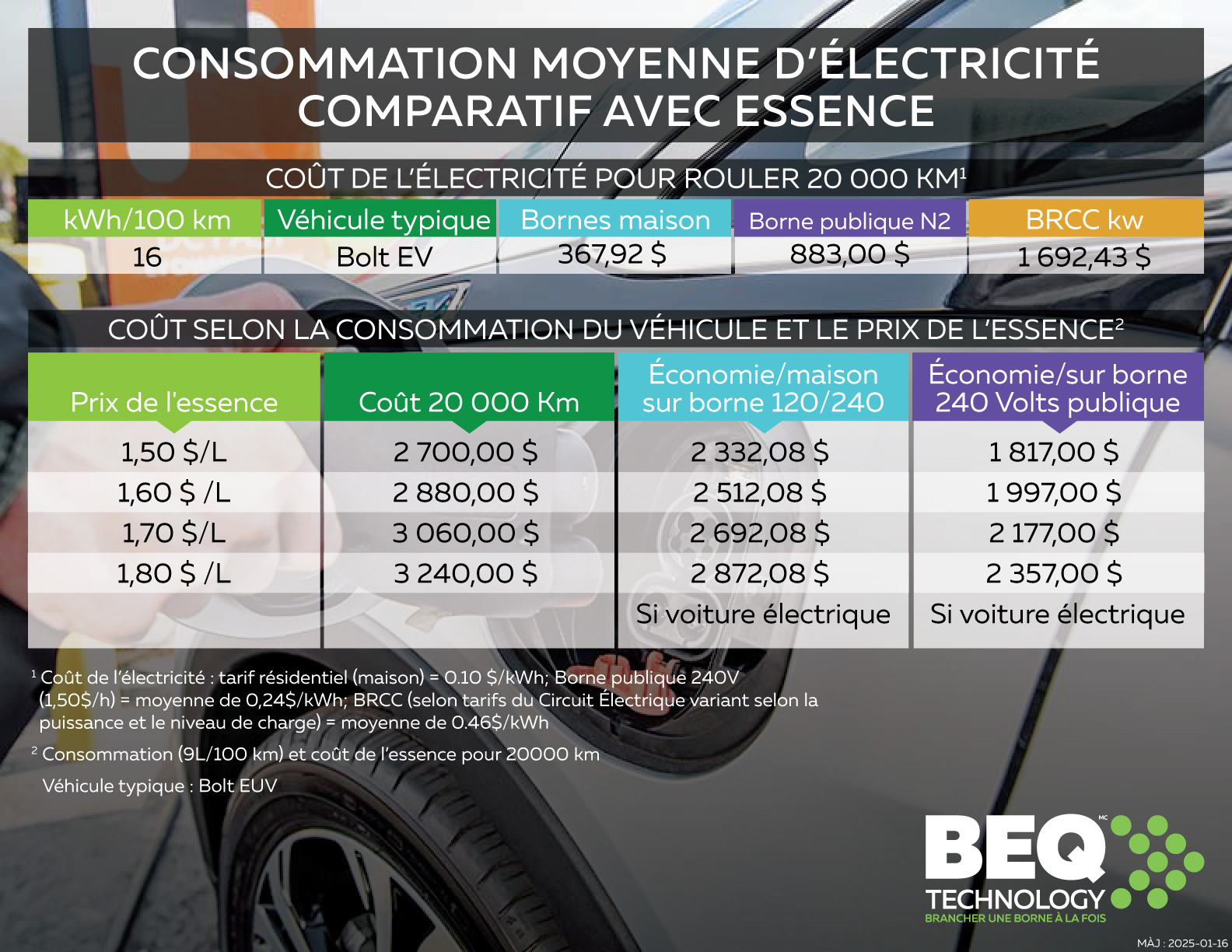
Yes, a rechargeable electric vehicle can significantly reduce gasoline costs, given the much lower cost of recharging. Recharging costs 75% less than gasoline. In addition, electric cars require less maintenance than gasoline cars, costing up to 50% less.